In the heart of Kenya’s mining industry lies the untapped potential to reshape our nation’s economic destiny. As the world moves towards climate action, the mining sector showcases exponential potential with the drastic demand increase for natural stones and the energy transition associated with minerals. It is within this context that I embark on a visionary journey into the future I envision for Kenya’s extractive industry, with a specific focus on the mining sector. I am fueled by a relentless determination to achieve sustainability and pave the way for a brighter tomorrow. Join me as we delve into a future that embraces value addition, marketplace literacy, technology, formalization, and efficient governance- a future that will ignite a vibrant and thriving extractive industry benefiting all.
Value Addition
Value addition is a term that resonates deeply within the extractive sector, echoing through countless political speeches and informed discussions. At its core, it signifies the imperative of enhancing the value of our mineral products before they are brought to market locally and internationally. The extractive industry, on paper, possesses the potential to drive our country’s economy, given the abundance of lucrative minerals within our borders. For instance, the coastal region boasts precious gemstones, while the western region holds vast deposits of gold. However, the regions bestowed with these minerals continue to languish in abject poverty, primarily due to the practice of selling raw, unprocessed minerals.

The absence of value addition and ore beneficiation can be attributed to various factors, including a lack of capital and insufficient skilled human resources. To pave the way for a prosperous future, our nation must prioritize and invest in the value addition of the minerals we extract. One potential solution lies in drawing inspiration from countries like South Africa, which have implemented measures to prohibit the sale of raw minerals. However, before imposing such a ban or prohibition, our government must ensure the presence of functional infrastructure, including beneficiation plants and well-equipped value-addition centers. By functional, I mean establishments that are commissioned and staffed with competent personnel, and furnished with the necessary equipment to carry out these crucial processes. The current state of the Voi Gemstone and Value Addition Center, for instance, falls short of meeting these requirements.

Market Infrastructure
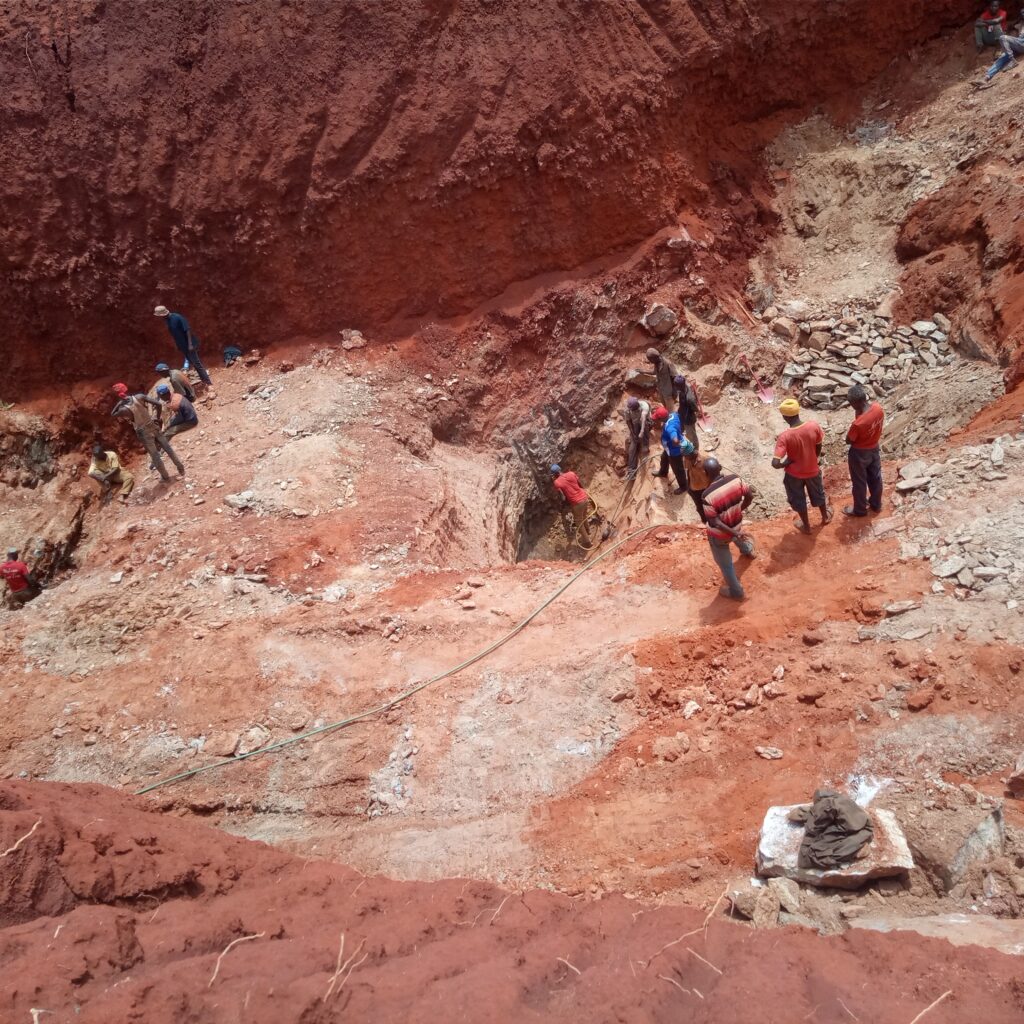
The future I envision is one where economic well-being permeates every level of the extractive industry. The existing structures have tilted the scales against the artisanal and small-scale (ASM) miners, the backbone of our sector, as they receive exploitive prices for their raw products. Additionally, the government loses out on crucial revenue due to informal and illegal value chains. To reshape this landscape, we must reinforce and streamline the industry’s marketing structure, eliminating unscrupulous players through technological advancements like blockchain technology and chain of custody. This transformation will ensure fair prices for miners and empower the government to monitor the extractive industry and perhaps focus more resources on it to maximize the revenue generation of the sector.
Marketplace Literacy
To bring about the envisioned future for the sector, I firmly advocate for the education and empowerment of our industry stakeholders through a comprehensive marketplace literacy approach. This approach seeks to equip individuals with the knowledge and skills necessary to actively engage in the marketplace as both consumers and entrepreneurs. In my view, one of the greatest challenges faced by many players at the end of the value chain is their lack of entrepreneurial intuition. Consequently, they struggle to navigate the intricacies of entrepreneurship, which significantly hampers their ability to generate optimal returns from their endeavors.
The proposed marketplace literacy initiative aims to bridge these gaps by providing training on various aspects of the marketplace, including understanding market dynamics, mastering pricing mechanisms, and developing effective negotiation skills. By imparting these key elements of the marketplace, we can empower individuals to make informed decisions and seize opportunities for growth and success. Additionally, financial literacy plays a pivotal role in the economic advancement of the industry. It is crucial to ensure that the bottom of the pyramid population possesses the necessary financial knowledge to maximize the benefits of improved product pricing. Without adequate financial literacy, any efforts to enhance prices for their products would yield limited results, perpetuating the vicious cycle of poverty. Such a scenario is not in line with the future I envision.
Leveraging Technology
In shaping the future of Kenya’s extractive industry, I envision leveraging the power of technology as a catalyst for innovation, efficiency, and sustainability. Presently, the sector has been slow in embracing disruptive technology, necessitating a paradigm shift for future sustainability. Although concerns about capital costs often hinder technology integration, there are emerging innovations that are both cost-friendly and affordable. The extractive industry must leverage these technologies across various stages, including exploration, extraction, processing, and mineral sales. Failure to do so would mean untapped industry potential and the perpetuation of the status quo. To facilitate technology integration, a different strategy is required, such as utilizing the sharing economy model, where equipment is shared among a group of individuals who pay a service fee without the need for ownership.
The recent report highlighting over 900 minerals in our beloved country has generated excitement among many. However, I find myself less enthusiastic, as I believe what truly matters is determining the economic feasibility of mining these minerals. The utilization of advanced technology in the sector plays a crucial role in swiftly answering this critical question and enabling the country to reap the benefits of mineral exploitation. For instance, the application of data analytics and remote sensing technologies can greatly enhance the exploration stage. By leveraging technology, we can also significantly reduce the frequency of accidents and casualties that plague the industry. These unfortunate incidents have not only tarnished the industry’s social acceptance but also disrupted its progress. Introducing automation and robotics will enhance operational efficiency and safety, diminishing the reliance on human labor and mitigating associated risks.
Formalization
The formalization of the extractive sector is a fundamental aspect that holds significant importance in the future I envision. Over the years, since the enactment of the Mining Act 2016, the concept of formalization has been widely discussed among mining stakeholders, who perceive it as the remedy for the sector’s challenges. However, I believe that the current formalization strategy carries a high risk of failure. Instead of a top-down approach, which offers limited potential for success, a bottom-up approach would be better suited to achieve positive outcomes. To ensure a sustainable future for the industry, all stakeholders, particularly the upstream stakeholders such as miners, must collaborate actively in the formalization process.
This stands in contrast to the government’s reliance on licensing as a means to promote formalization. By embracing a collaborative approach, we can successfully formalize the industry, thereby eliminating the negative impacts of informal mining and addressing the associated social, economic, and environmental consequences. Given the current global focus on just transition, responsible mining, and ESG compliance, formalization is not merely an option but an absolute necessity for the extractive sector.

Conclusion
In summary, the future I envision for Kenya’s extractive industry, particularly the mining sector, embraces value addition, marketplace literacy, technology, formalization, and efficient governance. By adding value to mineral products, investing in infrastructure, and banning the sale of raw minerals, we can drive economic growth and alleviate poverty in mining communities. Empowering stakeholders through literacy programs and leveraging technology will enhance efficiency and sustainability while minimizing accidents. A bottom-up approach to formalization, involving all stakeholders, is essential for addressing the social, economic, and environmental impacts of informal mining. Ultimately, a formalized sector is not just an option but a necessity for a sustainable future, aligning with global initiatives on responsible mining and ESG compliance.